1. Introduction
Proteins are essential macronutrients and a key component of a balanced diet. They consist of amino acids and fulfill important functions in the human body – including muscle building, muscle maintenance, satiety, and numerous metabolic processes.
Despite this knowledge, many people do not reach the recommended daily protein intake. The reason is rarely a lack of nutritional knowledge, but rather a lack of practicality in everyday life: Irregular meals, lack of time at work, travel, or training sessions often mean that protein-rich foods are neglected.
Snacks are particularly critical. While they provide quick energy, they often contain little protein and contribute little to meeting daily protein requirements. This creates a so-called protein gap , which can accumulate throughout the day.
A practical solution is protein-rich snacks that require no preparation and are flexible in their use. High-quality animal protein sources such as organic beef sticks can reliably help to meet protein needs even on the go.
This article explains what proteins are, how much protein the body needs daily, what protein sources exist, and how proteins can be easily integrated into everyday life – with a special focus on practical, protein-rich snacks.
2. What are proteins?
Proteins are vital macronutrients made up of amino acids and perform numerous functions in the human body, including muscle building, cell repair, enzyme production and the regulation of metabolic processes.
2.1 Structure of proteins
Proteins are made up of amino acids , which serve as the building blocks of the body. There are a total of 20 proteinogenic amino acids. The body can produce some of these itself, while others must be obtained through food and are considered essential .
The body uses these amino acids to:
-
to build the body's own proteins
-
to repair tissue
-
to form functional molecules such as enzymes and hormones
Since proteins are continuously broken down and rebuilt, a regular supply through diet is necessary .
2.2 What functions do proteins have in the body?
Proteins perform several key functions in the body:
-
Muscle building and muscle maintenance
Proteins contribute to building muscle mass and help maintain existing muscle – particularly relevant during physical activity and in old age. -
Saturation and energy balance
Protein-rich foods generally keep you feeling full longer than carbohydrate-rich snacks and can help keep blood sugar levels stable. -
Cell structure and regeneration
Cells, tissues, and organs consist largely of proteins. They are therefore essential for growth, repair, and renewal. -
Enzymes and hormones
Many enzymes and hormones are made of proteins and control important processes such as digestion, metabolism and signal transmission in the body.
2.3 Proteins in the body – why a regular intake is important
The human body does not have a long-term protein storage capacity like it does for fat or carbohydrates. Excess amino acids are broken down, while missing building blocks cannot be replaced in the short term.
That means:
-
Proteins should be consumed regularly throughout the day.
-
Snacks, in particular, play an important role.
-
Protein-rich snacks can help avoid nutritional deficiencies.
👉 Learn more about your daily needs here → Calculate your protein requirements
3. How much protein do you need per day?
Daily protein requirements depend on body weight, activity level, and individual goals. For adults, the average is between 0.8 and 2.0 grams of protein per kilogram of body weight per day .
3.1 General guidelines for protein requirements
⚠️ Note: The following information is for general guidance only and does not replace medical advice.
| lifestyle | Protein requirement (g/kg body weight/day) |
|---|---|
| Low activity / Daily life | approx. 0.8–1.0 g |
| Physically active | approx. 1.2–1.6 g |
| Muscle building / intensive sports | approx. 1.6–2.0 g |
Example:
A person weighing 70 kg needs – depending on their activity level – between 56 and 140 g of protein per day .
3.2 Why protein requirements are often not met in everyday life
Many people underestimate how much protein they actually consume throughout the day. This is less due to main meals and more to snacks and meals between meals .
Typical reasons:
-
Irregular meals
-
Lack of time at work or while traveling
-
Snacks with little protein and lots of sugar
-
Lack of planning for the journey
The result is a gradual undersupply throughout the day , even though basic knowledge about proteins is present.
3.3 Protein distribution throughout the day – it's not just the quantity that counts
For optimal supply, not only the total quantity is crucial, but also the distribution :
-
Breakfast: often low in protein
-
Lunch: variable
-
Dinner: usually high in protein
-
Snacks: often low in protein
Snacks, in particular, offer great potential to meet daily protein requirements more evenly.
3.4 Protein gap in everyday life – and how snacks can help
Between meetings, training sessions, travel, or appointments, there are often gaps in time where a full meal isn't possible. This is precisely where a so-called protein gap arises.
Protein-rich snacks can help:
-
no cooking
-
without cooling
-
flexible and portionable
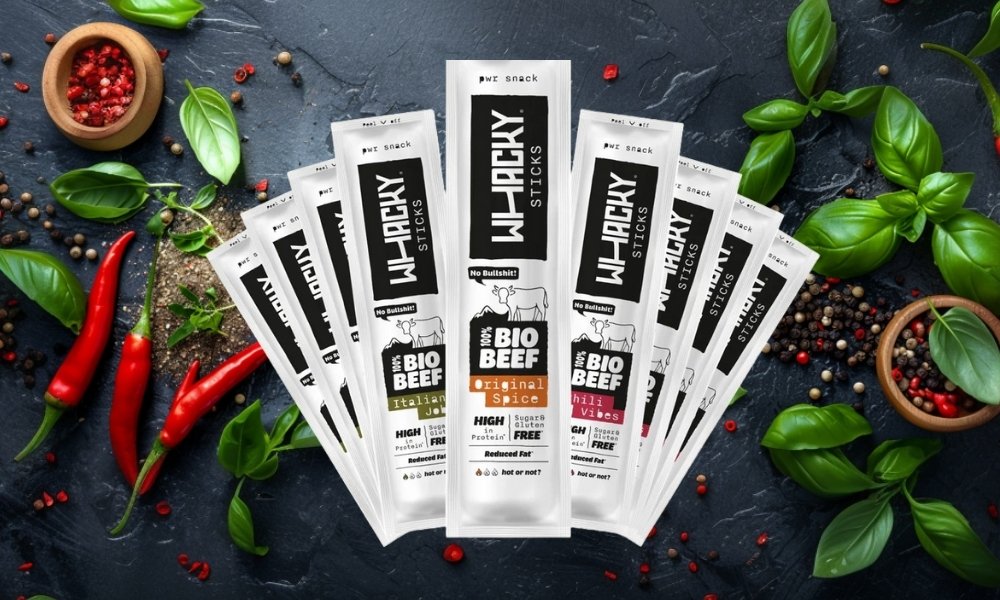
High-quality snacks with animal protein – such as Whacky Bio Beef Sticks – can be easily integrated into everyday life and help to reliably supplement daily protein requirements even on the go.
4. Overview of protein sources
Proteins can be obtained from various foods. Generally, protein sources can be divided into plant-based and animal-based proteins. Both provide protein, but differ in composition, quantity, and suitability for everyday use.
4.1 Plant proteins
Plant-based protein sources play a particularly important role in vegetarian and vegan diets. In addition to protein, they often also provide fiber and phytochemicals.
Typical plant-based protein sources:
-
Legumes (e.g. lentils, chickpeas, beans)
-
Nuts and seeds (e.g. almonds, pumpkin seeds)
-
Cereals and pseudocereals (e.g. oats, quinoa)
Classification for everyday life:
-
Often larger portions are needed to achieve relevant protein amounts.
-
Partially lower biological value of individual proteins
-
Often less practical for travel (preparation, shelf life)
4.2 Animal proteins
Animal-based foods are considered particularly high-quality protein sources because they contain all essential amino acids in a readily available form.
Typical animal protein sources:
-
Meat
-
eggs
-
Milk and dairy products (e.g. quark, yogurt, cheese)
They generally provide more protein per serving than plant-based alternatives and can be used specifically to meet daily protein requirements.
4.3 Animal protein in snack format – a practical solution
In everyday life, the problem with adequate protein intake is often not with main meals, but with snacks . This is precisely where animal protein sources in snack format offer a decisive advantage.
Why protein-rich meat snacks can be beneficial:
-
High protein content per serving
-
No preparation necessary
-
Long shelf life
-
Easy to portion for on the go
Organic beef sticks combine these qualities in a compact form:
-
high-quality animal protein
-
Organic quality
-
Ideal for the office, travel, or after sports.
👉 High-protein snacks for on the go
4.4 Plant or animal proteins – which is better?
Whether plant-based or animal proteins are more suitable depends on individual lifestyle, dietary preferences, and daily routine.
In short:
-
Plant proteins: versatile, but often less concentrated
-
Animal proteins: high in protein, complete, suitable for everyday use
-
Snacks containing animal protein are particularly suitable for on the go.
A balanced diet can effectively combine both protein sources.
5. Protein in everyday life – why snacks are crucial
Many people consume the majority of their protein through one or two main meals. However, in everyday life, this is often insufficient to consistently meet daily protein requirements . The time between meals, in particular, is frequently underestimated.
5.1 Typical everyday situations with protein gaps
Protein deficiencies occur primarily in situations where a complete meal is not available:
-
In the office or working from home
Meetings, appointments, or periods of focused work leave little room for balanced snacks. -
While traveling and on the go
Train stations, airports, or petrol stations usually offer carbohydrate-rich but protein-poor options. -
After sports or training
The body needs protein for regeneration, but a meal is not always possible immediately.
Especially in these situations, the choice of snack determines whether the protein requirement is met or not.
5.2 Why protein-rich snacks are beneficial
Protein-rich snacks fulfill several functions that are particularly relevant in everyday life:
-
Long-lasting satiety
Protein helps you stay full longer and reduces cravings. -
Stable energy level
Compared to high-sugar snacks, high-protein snacks cause less severe fluctuations in blood sugar levels. -
Practical integration into everyday life
They can be consumed without preparation and used flexibly.
This makes protein-rich snacks particularly suitable for filling protein gaps between meals .
5.3 What to look for in a good protein snack
Not every snack labeled "protein" is automatically beneficial. Important criteria include:
-
sufficient protein content per serving
-
as little sugar as possible
-
simple ingredient list
-
good durability
-
practical portioning
Snacks that meet these requirements can be integrated into the diet in a long-term and everyday way.
5.4 High-protein snacks for on the go: Organic beef sticks
Animal protein snacks like organic beef sticks meet many of the aforementioned criteria:
-
high-quality animal protein
-
compact portions
-
No cooking or cooling necessary
-
Ideal for the office, travel, or after a workout.
Conclusion: Integrating proteins easily and in a way that's suitable for everyday life
Proteins are a key component of a balanced diet. They support important bodily functions, contribute to satiety, and play a crucial role in muscle maintenance and regeneration. Individual protein requirements depend on lifestyle, physical activity, and personal goals.
In everyday life, however, adequate protein intake often fails not due to a lack of knowledge, but rather due to implementation. Irregular meals, lack of time, and low-protein snacking mean that daily requirements are often not consistently met. This is precisely where the practicality of the chosen protein sources for everyday life becomes crucial.
Protein-rich snacks can easily help fill these gaps. They can be flexibly integrated into your daily routine and offer a practical supplement to main meals. High-quality options like organic beef sticks provide animal protein in a convenient format and are particularly suitable for on the go, at the office, or after sports.
Those who consciously consume protein throughout the day and rely on practical solutions create a good basis for a balanced, realistic diet – without additional effort.