You train regularly, watch your diet – and finally want to burn fat with the keto diet without sacrificing your performance? 💪
If you need a concise overview of the basics (ketosis, macros and allowed foods), start with our comprehensive guide to the keto diet .
Then you may have already noticed: The combination of keto and exercise isn't a sure thing. While some people reach peak performance in ketosis, others feel sluggish and weak.
What's the reason for this? And what can you do to make keto boost your performance instead of hindering it ?
Introduction
The ketogenic diet changes how your body gets its energy – away from sugar and towards fat as the primary fuel. That sounds perfect for anyone who wants to lose fat.
But especially when it comes to sports, keto presents you with new challenges:
How do you train when your glycogen stores are depleted? How do you recover without traditional carbohydrates? And is it really possible to build muscle in ketosis ?
In this article you will learn,
- how keto affects endurance, strength and recovery,
- which mistakes athletes should avoid when starting out,
- and how to optimally plan your diet around your training – including a sample day and snack tips.
You will not only receive theory, but also practical strategies to perfectly combine training and ketosis – for stable energy, faster regeneration and more performance from fat instead of sugar.
👉 In short: This guide shows you how to implement Keto & Sport in a way that is practical, effective and sustainable in everyday life – without energy crashes or muscle loss.
Brief summary
The ketogenic diet changes how your body generates energy – and this also affects your athletic performance. In this article, you'll learn how keto affects endurance, strength, and recovery, why the transition phase is crucial, and how you can optimize your training with the right combination of fats, protein, and timing.
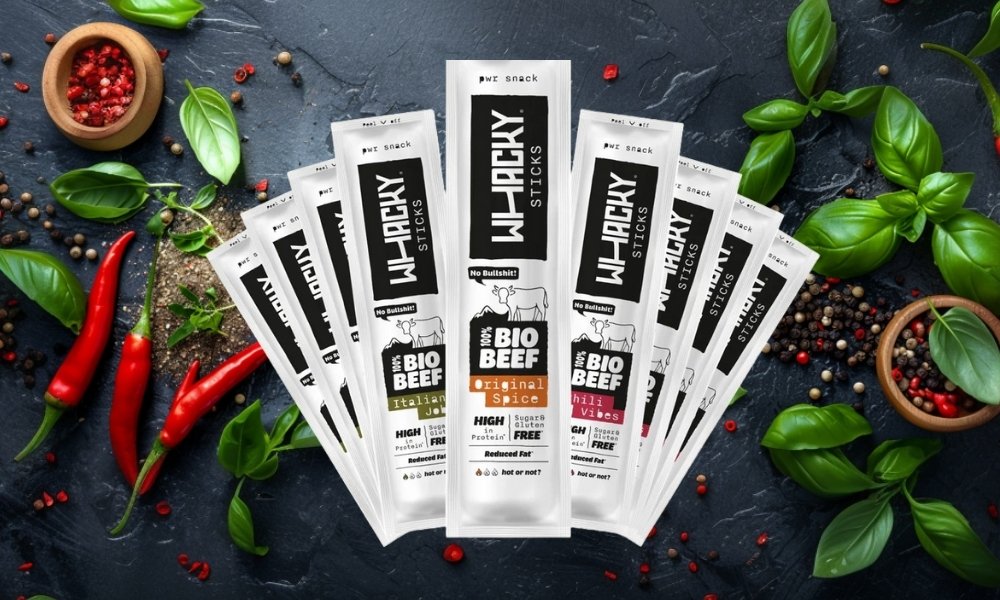
Whether running, strength training or HIIT: You will learn how to increase your performance in ketosis, avoid typical mistakes and control your energy in a targeted way with natural foods – such as eggs, salmon or organic beef sticks.
👉 Conclusion: Keto and sport are not mutually exclusive – they complement each other if you understand your body and give it what it needs.
⚡️ What happens in the body – ketosis and energy during training
Before you know how keto affects your athletic performance, you need to understand how your body gets energy – and why that fundamentally changes in ketosis.
In a "normal" metabolism, your body primarily uses carbohydrates (glucose) as fuel. During intense exertion, it draws on stored glycogen reserves in the muscles and liver.
With keto, however, you reverse the principle: You deprive your body of carbohydrates so that it learns to use fat as its primary energy source . In the liver, this process produces so-called ketone bodies , which fuel your brain and muscles.
🔬 Energy sources compared
| feature | Glucose (carbohydrates) | Ketone bodies (fats) |
|---|---|---|
| Energy source | Glycogen in muscles & liver | Body fat & fatty acids |
| Energy availability | fast, but limited (approx. 90 min.) | slow, but virtually unlimited |
| Blood sugar effect | highly fluctuating | stable |
| Performance profile | ideal for short, explosive loads | Ideal for endurance and consistent intensity |
| Metabolic byproduct | Lactate (leads to muscle burning) | Ketones (clean fuel) |
💡 What does that mean for your training?
- In the first 2-4 weeks after starting keto, your body is in the adaptation phase : glycogen stores are depleted, and fat burning is not yet optimal.
👉 This can lead to a short-term drop in performance (often mistakenly interpreted as "keto doesn't work").
- After adaptation , your body learns to use ketone bodies efficiently – energy remains more stable, you are less hungry and recover faster after endurance exertion.
- Explosive sports (e.g., sprinting, CrossFit, weightlifting) benefit less, as they still require fast glucose energy – targeted “carb timing” is useful here (more on this later).
Conclusion:
Keto is not an energy "booster" in the classic sense – but rather a change in the engine's metabolism .
While other athletes constantly need to refuel with carbohydrates, you learn to draw on your fat reserves.
The result: more consistent energy , better fat burning and, in the long term, more focus during training – if you give your body time to adapt.
🏋️ Training in the adaptation phase – performance slump or turbo boost?
When you start the keto diet, you often experience a rollercoaster of emotions in the first few days:
Energy, focus and motivation fluctuate, the training feels harder, you sweat more – and yet your pulse remains low.
What sounds paradoxical is completely normal: Your body is currently learning to switch from sugar to fat burning – and that costs energy.
🔄 What happens in the body
- Empty glycogen stores: Without carbohydrates, the body only has 30–50% of its usual glucose reserves available.
- New energy pathways: The enzymes for fat burning first need to be “trained” – this takes 2–4 weeks.
- Electrolyte loss: Through glycogen depletion, your body loses water, sodium, magnesium, and potassium.
- Consequence: headaches, fatigue, muscle heaviness – often mistakenly interpreted as "keto doesn't work".
💡 Fun fact: This transition phase is often called "Keto Flu" in the keto community.
But don't worry: You can significantly reduce them if you know what's important.
⚙️ Strategies to overcome a slump in performance
1️⃣ Reduce training intensity (temporarily)
For the first two weeks, it's best to train moderately: walks, light strength training, mobility exercises, yoga.
→ This way you won't overload your system while your metabolism adapts.
2️⃣ Drink enough water & add salt consciously
At least 2.5–3 liters of water daily , plus 1–2 g of additional salt via broth or electrolyte drinks.
→ This stabilizes blood pressure and muscle contraction.
3️⃣ MCT oil as an energy booster
A tablespoon of MCT oil (e.g. in coffee or smoothie) provides readily available ketones – perfect before training or during the adaptation phase.
4️⃣ Regular meals instead of fasting
During the adaptation phase, it is better to eat regularly (3 meals/day) to give the body a constant energy supply.
→ You can reintroduce intermittent fasting later.
5️⃣ Enough fat – but the right kind of fat
Focus on high-quality sources: avocado, olive oil, butter, salmon, nuts.
→ This is how your body gets the “fuel” it now needs to learn to process.
💬 Practical tip
If you suddenly experience an "energy crash" during training, this is not a setback, but a signal:
Your body has learned to avoid sugar – but not yet to use fat perfectly.
Stay calm, eat enough fat, drink salted water – and give yourself two weeks. After that, you'll usually experience the "keto kick": clear head, stable performance, no cravings.
Conclusion:
The adaptation phase determines whether keto works for you.
Those who approach these first weeks in a planned, relaxed and intelligent way will afterwards benefit from a metabolism that provides more stable, efficient and sustainable energy – in everyday life as well as during training.
🏃Keto for different sports
Not everyone trains the same way – and that's precisely why keto doesn't have the same effect on every athlete.
While endurance athletes benefit from fat burning in the long term, strength and high-intensity athletes reach their limits when the body no longer has carbohydrates available.
With the right strategy, any sport can work with keto – timing is crucial.
⚡️ Overview: How Keto affects different sports
| sport | Energy source in training | Effects of Keto | Recommendation |
|---|---|---|---|
| Endurance sports (running, cycling, hiking) | Slow energy from fat burning | ✅ Significantly more stable energy, less hunger, longer periods of exertion possible | Keto is ideally suited – especially after 3–4 weeks of adjustment. |
| Strength training / muscle building | Short-term energy from glycogen | ⚠️ Less of a pump in the initial phase; strength may temporarily decrease. | Targeted protein intake + possibly carb cycling |
| HIIT, CrossFit, Sprint | Explosive energy (ATP/glucose) | ❌ Performance losses possible – due to lack of fast energy | Moderate adjustment or targeted pre-workout carbohydrates |
| Recreational sports / Gym | Mixed load | ✅ Excellent balance of fat burning and stability | Ideal combination with a keto diet plan |
| Team sports (football, tennis, etc.) | Switching between endurance and sprint | ⚠️ Tough during the keto adjustment phase | A mixed model with "Targeted Keto" is recommended. |
🥑 1️⃣ Keto and endurance sports – the perfect combination
For runners, cyclists or hikers, Keto is a real game changer.
As the body learns to use fat as fuel, it has access to virtually unlimited energy reserves .
Result: consistent performance, less hunger, reduced inflammation after exertion.
✅ Tip for endurance athletes:
- 60–70% fat content in the diet
- 20–25% protein, 5–10% carbohydrates
- 1 tbsp MCT oil or Bulletproof Coffee 30 min before training
- 3-4 hours after training, a protein-rich meal (e.g., salmon with broccoli & butter)
💡 Keto in endurance sports is not a sprint – it's a marathon. After 3–4 weeks of adaptation, the energy boost comes.
🏋️ 2️⃣ Keto and strength training – building muscle with fat?
Many fear that they will no longer be able to build muscle on the keto diet.
Muscle growth is indeed possible even in ketosis – but it requires precise protein control and sufficient calories .
✅ What works:
- 1.6–2.0 g protein per kg body weight
- Moderate calorie balance or slight surplus
- Fats as the main energy source (olive oil, butter, avocado, nuts)
- Organic beef sticks as a protein snack between training sessions
⚙️ Optional: “Targeted Keto” – small amounts (10–20 g) of fast-acting carbohydrates directly before training (e.g. berries or half a banana) → for maximum pump.
💡 Tip: Train with a focus on technique and progression rather than short-term strength peaks – Keto builds functional, not “pumped-up” muscles.
🧗 3️⃣ HIIT & CrossFit – when ketosis reaches its limits
In high-intensity sports, energy production primarily relies on glucose.
Keto can cause short-term performance drops here, as less fast energy is available.
That doesn't mean keto is unsuitable – you just need to plan smarter.
Many performance problems arise from typical keto mistakes – read more about it here: The 10 most common mistakes in the keto diet .
✅ Strategy:
- “Targeted Keto”: 15–25 g of carbohydrates 30–45 minutes before the workout (e.g. rice paper, date, half an apple)
- Then switch back to a strict keto diet
- MCT oil or ketone salts as fast energy sources
💡 Those who regularly train with HIIT often benefit from a cyclical keto diet (carb cycling).
🧘♀️ 4️⃣ Leisure & everyday sports – Keto made easy
If you train regularly but have no competitive goals, keto is almost ideal.
You benefit from a constant energy level , less cravings, and a stable mood.
✅ It's that easy:
- 3 meals a day, rich in fat & protein
- Snacks such as organic beef sticks or nuts readily available
- No mandatory "carb management" is necessary
- Ideal for office, everyday life, gym
💡 Practical tip: If you train after work, eat a protein-rich meal at lunchtime (e.g., eggs & avocado) and then a high-fat meal to promote regeneration & ketosis.
Conclusion:
Keto is not "one diet for all sports" , but a flexible system.
Those who understand how the body uses energy can tailor their keto diet to specific needs – for more endurance, defined muscles, or simply more energy in everyday life.
The key lies in the balance between fat burning and performance management.
🥩 Keto before, during and after training – nutrition timing & practical plan
Success with keto and sports depends not only on what you eat, but also on when you eat it.
With the right nutrition around your training, you can keep your energy levels constant, build muscle and stay in ketosis at the same time – all without artificial boosters or powders.
🕘 Before training – natural energy from fat and protein
In ketosis, your body uses fat as fuel. Therefore, small, high-fat snacks are ideal before training to provide energy without raising blood sugar.
✅ Recommended pre-workout strategies:
| Goal | Snack / Meal | Time before training |
|---|---|---|
| 🧠 Mental Energy & Focus | 1 organic beef stick 🥩 + ½ avocado | 30–45 min |
| 💪 Strength & Endurance | 2 boiled eggs 🥚 + a piece of cheese 🧀 | 60 min |
| 🚀 Intensive training (CrossFit, HIIT) | 1 organic beef stick 🥩 + a small handful of berries 🍓 | 30 min |
💡 Tip: If you train in the morning, a glass of water and an organic beef stick are often enough – this way you train easily using fat metabolism and stay in ketosis.
💧 During training – hydration is crucial
Keto means that your body loses more water due to the lower carbohydrate intake.
This means you need more fluids and electrolytes to maintain performance and concentration.
✅ During training:
- Drink small sips of water every 15-20 minutes.
- Add a pinch of salt or a squeeze of lemon juice
- For long sessions (>60 min): a piece of cheese or half an organic beef stick as a snack
🚫 Avoid:
- Isotonic drinks or energy drinks with sugar
- Diet drinks with artificial sweeteners – they can trigger cravings
💡 Practical tip: If you notice that your muscles are getting heavy or you are getting tired, it is often not due to the training – but to a lack of fluids.
Drink regularly, not just when you're thirsty.
🍽️ After training – Regeneration with fat & protein
After a workout, your body needs building blocks for regeneration: protein for muscles, fat for energy and cell building.
Carbohydrates are not necessary as long as you combine enough protein and fat.
✅ Example post-workout meals:
| Goal | Have a good meal | time |
|---|---|---|
| 🥩 Muscle building | Organic beef sticks 🥩 + cheese cubes + cucumber slices | within 30–60 minutes |
| 🍳 Regeneration | Scrambled eggs with spinach & butter | within 60–90 minutes |
| 🚶 Everyday life & relaxation | Salmon fillet with broccoli & olive oil | 1–2 hours after training |
💡 Tip: If you're on the go – two organic beef sticks and a piece of cheese are perfectly sufficient as a post-workout meal.
You stay in ketosis, get enough protein and feel full without feeling bloated.
🧩 Practical example: A complete keto training day
| time | Nutrition | Example |
|---|---|---|
| 🕕 07:30 | Breakfast | 2 eggs with butter & avocado 🥑 |
| 🕙 10:30 | snack | 1 organic beef stick 🥩 + handful of nuts |
| 🏋️ 12:30 | training | Salt water, possibly half an organic beef stick before the workout |
| 🕑 13:30 | Post-Workout | Scrambled eggs with cheese & spinach |
| 🕔 17:00 | snack | Organic beef stick 🥩 + cucumber slices |
| 🌙 7:00 PM | Dinner | Salmon with broccoli & herb butter |
| 💧 All day long | Water, herbal tea, 2–3 liters total amount |
Conclusion:
Keto works in sports not despite , but because of the right nutrition timing strategy.
Natural fats, protein sources and small snacks like organic beef sticks will keep you energized, support your muscles – and maintain a stable ketosis.
💪 No sugar, no shakes, no excuses – just real food that delivers results.
🧠 Keto Performance Hacks – Supplements, Recovery & Everyday Tips
Those who combine keto and sport don't need a drawer full of powders.
The best "supplements" come from real food – what matters is what your body actually needs in ketosis: electrolytes, good fats, sufficient protein and regeneration.
⚡️ 1️⃣ Electrolytes – your underestimated performance factor
On a keto diet, your body excretes more water and minerals.
Loss of sodium, magnesium and potassium is one of the main reasons for fatigue, muscle cramps or headaches after exercise.
✅ Here's how to meet your electrolyte needs naturally:
| mineral | function | Natural sources | Practical tip |
|---|---|---|---|
| Sodium (salt) | Fluid balance, muscle contraction | Sea salt, broth | Add a pinch of salt to your drinking water or broth in the evening. |
| magnesium | Muscle & nerve function | Pumpkin seeds, spinach, almonds | 1 handful of nuts or green vegetables daily |
| potassium | Energy production, heart function | Avocado, salmon, broccoli | 1 avocado per day = top keto potassium source |
💡 Tip: If you have restless legs or cramps in the evening – eat half an avocado with salt or drink some broth. That's pure keto "recovery".
🧬 2️⃣ Omega-3 fatty acids – natural anti-inflammatories
Physical exertion causes micro-inflammation in muscles.
Omega-3 fatty acids help them heal faster – and also improve regeneration, joint health and focus.
✅ Best sources:
🐟 Salmon, mackerel, sardines, herring
🥚 Eggs from pasture-raised hens
🥑 Avocado & walnuts as a plant-based supplement
💡 Keto tip: Plan for 3-4 fish meals per week. Alternatively: 1-2 tablespoons of ground walnuts or flaxseeds daily.
🦴 3️⃣ Collagen & Bone Broth – Regeneration from Within
During training, not only muscles, but also connective tissue, tendons and joints are stressed.
Collagen supports regeneration and ensures stable joints.
✅ This is how it works, of course:
- 1-2 cups of bone broth per week
- Chicken skin, beef broth or gelatin desserts (sugar-free)
- Collagen-rich cuts (e.g., oxtail, shank) in stews
💡 Extra tip: Broth is not only rich in nutrients, but also replaces electrolytes – perfect on training days.
☀️ 4️⃣ Vitamin D & K2 – Energy, Muscles, Mood
Vitamin D acts like a hormone: It influences energy production, muscle function and recovery.
Since many people don't get enough sun, a lack of sunlight can significantly reduce performance.
✅ Natural sources:
- Salmon, eggs, cheese, butter
- In dark months, consider vitamin D3-K2 drops (after blood tests!).
💡 Tip: Start the day with a walk or a short sunbath – this will boost your mood and metabolism at the same time.
🧩 5️⃣ Creatine – optional for strength athletes
Creatine is one of the few supplements with clearly proven effects – even in ketosis.
It supports the energy supply to the muscles and can help avoid short-term losses of strength.
✅ Dosage:
3–5 g daily, preferably after training or with a protein-rich meal.
💡 Of course, the focus remains on real food , but for ambitious strength athletes, creatine is a safe option.
💤 6️⃣ Regeneration – the forgotten training
Keto only works if you also recover.
Your body uses rest periods to repair muscles and use ketone bodies more efficiently.
✅ Top recovery strategies:
- 7-8 hours of sleep – otherwise fat burning and muscle recovery stagnate.
- Stretching or walks after training
- Sauna & alternating showers for circulation & relaxation
- Organic beef stick + water after evening training – light, high in protein, without strain on the digestive tract
💡 Tip: Consciously plan for regeneration – it is not a luxury, but a performance factor.
🧠 Conclusion:
Keto performance is not a question of expensive supplements, but of balance:
Salt, sleep, fat, protein and patience – these are the real game changers.
If you combine this with natural helpers like avocado, fish, broth and organic beef sticks, you create a diet that not only keeps you in ketosis, but also makes you strong, clear and resilient.
💪 No powder, no hype – just real food for real performance.
⚠️ Common mistakes with keto and sports – and how to avoid them
Keto can take your training to the next level – or completely stop you.
Whether it's energy loss, cravings, or muscle loss: the causes are usually the same.
Here are the most common mistakes keto athletes make – and how you can easily avoid them.
❌ Mistake 1: Eating too little – especially fat
Many people start keto with too few calories because they (still) distrust fat.
The result: fatigue, poor recovery, no muscle growth.
✅ Here's how to avoid this:
- Plan for 70-75% of your calories to come from fat (e.g., avocado, butter, cheese, salmon).
- If you are often hungry, eat more fat , not more protein.
- 1-2 tablespoons of olive oil over vegetables or 1 organic beef stick as a snack can work wonders.
💡 Reminder: Fat is not the enemy in keto – it's your fuel.
💧 Mistake 2: Drinking too little – sweating too much
Keto dehydrates you. Those who don't drink enough risk reduced performance, headaches, and muscle cramps.
✅ Here's how to avoid this:
- Drink 2.5–3 liters of water per day.
- Add 1 pinch of salt per liter.
Avocado, broth, or mineral water with a high magnesium content can help balance the magnesium levels.
💡 Tip: Place a 1-liter bottle on your desk – visual contact = drinking impulse.
💤 Mistake 3: Too little rest & sleep
Even the best diet is useless if your body doesn't have time to recover.
Lack of sleep inhibits fat burning, lowers testosterone and increases cortisol.
✅ Here's how to avoid this:
- Plan for 7-8 hours of sleep per day.
- Avoid heavy meals shortly before bedtime.
- Magnesium-rich snacks such as nuts or broth in the evening help with falling asleep.
💡 Remember: Recovery is part of your training plan – not a break from it.
🏋️ Mistake 4: Wanting too much too soon
Many expect peak performance within a few days – but fat adaptation takes time.
During the first 2-3 weeks, your training may feel temporarily more difficult.
✅ Here's how to avoid that:
- Start with lighter training during the acclimatization phase (e.g. mobility, basic endurance).
- Only increase intensity when you feel energized.
- Trust the process – ketosis is not a sprint, but a transition.
🍌 Mistake 5: Too few electrolytes & micronutrients
Many people drink a lot of water – but forget about the minerals.
Without sodium, magnesium, and potassium, your body cannot efficiently use energy from fat.
✅ Here's how to avoid that:
- Drink broth, salt vegetables, eat avocado regularly.
- 1 organic beef stick also contains valuable minerals and protein for muscles.
- Supplement magnesium with pumpkin seeds or spinach.
💡 Practical tip: If you feel weak or get a headache – add salt first, then think.
🥚 Mistake 6: Too one-sided a diet
“Eggs and bacon” may be a classic keto dish, but it gets boring in the long run – and is low in nutrients.
✅ Here's how to avoid this:
- Vary your protein sources: beef, chicken, fish, eggs, cheese.
- Include colorful vegetables with few carbohydrates (broccoli, zucchini, bell peppers).
- Rotation principle: Test at least 1 new recipe every week.
💡 Tip: Variety not only provides more micronutrients, but also keeps motivation high.
🧠 Mistake 7: Poor timing during training
Many people eat right before intense workouts or go into the workout completely fasted.
Both can be counterproductive on the keto diet.
✅ Here's how to avoid this:
- 30–60 minutes before training: small snack with fat & protein (e.g. organic beef stick + avocado).
- After training: a protein-rich meal for regeneration (e.g., eggs or salmon).
- No training directly after large meals.
🧩 Conclusion:
The most common keto mistakes are not caused by a lack of discipline – but by a lack of knowledge about fat adaptation, water balance and timing.
If you pay attention to these points, you can combine keto and sport in the long term without loss of energy or frustration.
👉 Remember: fat, fluids, focus – and patience. Then your body will deliver performance from fat, more consistently than ever before.
🥑 Sample day for keto athletes – meal plan & training in everyday life
The theory is sound – now it's time for practice.
What does a typical day look like when you combine keto and exercise ?
The following sample plan shows you how to maintain energy, focus and performance throughout the day with simple foods, smart timing and clear structure – all without a carbohydrate crash.
You can find a complete weekly plan to get started here: Keto Diet Plan – 7 Days to Start .
📅 Example day: Keto & Training in everyday life
| time | phase | Meal / Action | Example |
|---|---|---|---|
| 🕕 07:00 | Start to the day | Breakfast – Fats & Protein for Focus | 2 eggs 🥚 with avocado 🥑, 1 tsp butter, black coffee ☕ |
| 🕘 10:00 | Snack & Concentration | Small snack | 1 organic beef stick 🥩 + handful of almonds 🌰 |
| 🏋️ 12:30 | training | Light pre-workout | ½ avocado 🥑 + salt + 1 glass of water 💧 |
| 🕒 2:00 PM | Post-workout recovery | High in protein & filling | Ground beef with broccoli 🥦 & cheese 🧀 |
| 🕕 17:00 | Snack / Replenish energy | Protein and fat in balance | Organic beef stick 🥩 + cucumber slices 🥒 |
| 🌙 7:30 PM | Dinner & Relaxation | Nutrient-rich, easily digestible | Salmon 🐟 with zucchini & herb butter |
| 🌜 9:00 PM | regeneration | Promote sleep | 1 cup of broth 🍲 or herbal tea 🌿, possibly a few nuts for magnesium |
⚡️ Training recommendation for everyday keto life
| Goal | Training format | Length of time | Recommendation |
|---|---|---|---|
| Fat burning | Basic endurance (e.g. walking, cycling) | 30–60 min | On an empty stomach or after a light snack |
| Muscle building | Strength training (full body, 3-4 times/week) | 45–60 min | Then protein + fat |
| regeneration | Mobility / Yoga / Walk | 20–30 min | In the evening, it improves sleep quality. |
💡 Practical tip: If you train in the afternoon, eat your main protein at lunchtime – this way your body uses the nutrients optimally.
🥤 Drinks throughout the day
- 2.5–3 liters of water or herbal tea
- In the morning: 1 glass of water with salt and lemon
- At lunchtime: still water with cucumber slices
- In the evening: broth or magnesium tea for muscle relaxation
🧠 Result: Stable energy, better regeneration
This example day shows:
Keto doesn't work through deprivation, but through planning.
With healthy fats, sufficient protein and smart timing, you stay efficient, mentally focused and physically balanced – without a carbohydrate roller coaster.
👉 Important: Adapt quantities and times to your daily routine – keto is flexible, not dogmatic.
🧩 Conclusion: Keto and Sport – Fat as your best fuel
Keto and sport are not mutually exclusive – they complement each other perfectly if you understand how your body works.
Using fat as an energy source allows you to train more consistently, recover faster, and benefit from mental clarity instead of sugar crashes.
Three things are crucial:
1️⃣ Eat enough fat and protein – no starving in ketosis.
2️⃣ Replenish water and electrolytes – otherwise the body will slow down.
3️⃣ Patience – the transition takes time, but it's worth it in the long run.
You can find the complete introduction, including food lists and a meal plan, in the guide to the ketogenic diet .
Whether you run, lift weights, or simply want to stay fit:
With the right planning, real food and little helpers like the organic beef sticks, you'll stay in ketosis, strong and productive – day after day.
💪 Fat is not an enemy – it's your engine.