Introduction
The ketogenic diet is considered one of the most effective ways to burn fat, stabilize energy, and reduce cravings. However, many fail before they even get started – not because the diet doesn't work, but because they unknowingly fall into classic keto traps.
Often it's small things like hidden carbohydrates , too little fat , or a lack of electrolytes that throw the body out of ketosis. Add to that everyday factors like stress , insufficient sleep , or poor planning – and suddenly success eludes you.
In this article, I'll show you the 10 most common mistakes on the keto diet – and, most importantly, how to avoid them in practice . You'll learn:
- which pitfalls will knock you out of ketosis,
- how you can better understand your body,
- and which small changes have an immediate effect.
👉 Here's how to make keto suitable for everyday life, effective – and successful in the long term.
If you're just starting out, first read the comprehensive guide to the keto diet – there you'll find the basics of ketosis, macros and allowed foods.
Brief summary
The keto diet promises rapid fat burning and increased energy – but many fail due to small yet crucial mistakes. In this article, you'll learn about the 10 most common pitfalls of the ketogenic diet – from hidden carbohydrates and insufficient water intake to stress, lack of sleep, and poor planning.
You will learn how to recognize and avoid each of these mistakes , which foods are truly keto-friendly, and how to consistently implement keto in everyday life, in restaurants, or on the go.
With practical tables, tips and examples, you get everything you need to stay in ketosis permanently – without frustration, without deprivation.
The most important basics of the ketogenic diet (ketosis, macros, getting started) can be found in the Keto Diet Guide .
Mistake 1: Failing to recognize hidden carbohydrates
One of the most common keto mistakes: You're careful about your carbohydrate intake – but they still manage to sneak in. Not through pasta or bread, but through hidden sugars and starches lurking in supposedly "healthy" products.
🍶 Typical carbohydrate traps in everyday life
| Product category | Typical trap | Better alternative |
|---|---|---|
| Sauces & Dressings | Ketchup, mustard, salad dressing with sugar or cornstarch | Homemade dressing with olive oil, vinegar & herbs |
| Sausages & Cold Cuts | Added sugar, dextrose, starch | Organic ham, salami without added sugar |
| Dairy products | Fruit yogurt, milk (lactose) | Greek yogurt (10%), cream, quark |
| Low-carb products | “Protein bars”, “low-carb bread”, “keto muesli” containing sugar alcohols | Homemade keto snacks or erythritol-sweetened versions |
| drinks | “Sugar-free” iced teas, energy drinks containing maltitol or sucralose | Water, tea, Bulletproof Coffee, unsweetened almond milk |
👉 Practical tip: Always read the ingredient list, not just the nutrition facts panel. Terms like maltitol, sorbitol, dextrose, glucose syrup, starch, and inulin almost always indicate added carbohydrates.
🔍 Why hidden carbohydrates are problematic
Just 5–10 grams of extra carbohydrates can be enough to kick you out of ketosis. Your body is particularly sensitive in the initial phase. So, if you eat some "hidden sugar" every day, you'll remain in a constant back-and-forth between burning fat and sugar – and you'll never fully reach ketosis.
✅ Here's how to avoid this mistake
🧾 Check ingredient lists – anything ending in -ose , -syrup or -starch is suspicious.
🛒 Buy unprocessed products: meat, fish, eggs, vegetables, nuts.
🍳 Cook fresh: Sauces, dressings and marinades can be made at home in minutes.
📱 Use apps like Yazio or FDDB to check hidden carbs per 100g.
🧠 Remember: Only those who know where carbohydrates lurk can implement Keto cleanly in the long term.
💡 Conclusion on mistake 1:
Hidden carbohydrates are the main reason why many people don't reach ketosis despite following a keto diet. Pay particular attention to processed foods and sauces – and stick to natural foods that you can control yourself.
Mistake 2: Portions that are too large – or incorrect portioning
"Keto means lots of fat – so I can eat as much as I want!"
Many people think this at the beginning – and then wonder why the scale isn't budging. The point is: Keto isn't an "all-you-can-eat diet." Even ketogenic foods contain calories, and portions that are too large can quickly throw you out of your energy deficit.
⚖️ Why portion sizes are crucial in keto
Even though fat is your main energy source, it provides more than twice as many calories as protein or carbohydrates (9 kcal per g of fat vs. 4 kcal per g of protein/carbohydrate).
So if you "just eat whatever you want", you can easily consume too many calories – and your body will remain stagnant, even if you are technically in ketosis.
🧮 Recommended macro distribution (Keto standard model)
| Macronutrient | Calorie percentage | Guideline value per day (at 2,000 kcal) | Example |
|---|---|---|---|
| Fat | 70–75% | approx. 155 g | Avocado, olive oil, salmon |
| protein | 20–25% | approx. 100 g | Eggs, meat, fish, cheese |
| carbohydrates | 5–10% | max. 30 g | Broccoli, spinach, zucchini |
👉 Rule of thumb: It's better to stay slightly in a deficit (-300 kcal/day) rather than "overcompensating".
✅ Practical tips on the right portion size
✋ Fat sources: 1–2 tablespoons of oil or butter per meal are usually perfectly sufficient.
🍗 Protein: approx. 1.5–2 g per kg body weight (e.g. 120 g for a 60 kg person).
🥦 Vegetables: 1–2 handfuls of low-carbohydrate vegetables per meal.
🥜 Nuts & seeds: a small handful (30 g) – more is often too much.
🍫 Snacks: only when you're really hungry, not "because you can".
⚠️ Error check: How to tell if you're eating too much
- You're not losing weight despite being in ketosis → calorie surplus.
- You feel full or tired after every meal.
- You snack between meals without being really hungry.
👉 In that case: Measure or track macros – e.g. with apps like Yazio or Cronometer .
💡 Conclusion on mistake 2:
Keto doesn't work automatically with fat alone. The key is moderation . Small portions, mindful eating, feeling full – and stopping before you overeat.
Mistake 3: Skipping meals & eating irregularly
Many people think: "If I eat less, I will lose weight faster."
But with keto, the exact opposite can happen. Long gaps between meals or skipped meals throw your metabolism off balance, lead to cravings – and often to unconscious overeating later in the day.
⚠️ Why irregular eating is problematic on keto
- Your blood sugar level remains stable, but your energy level fluctuates .
- Prolonged fasting periods without planning can trigger electrolyte deficiencies or energy slumps .
- The body goes into "starvation mode" when it does not receive a supply of fat for an extended period of time.
👉 Especially in the first few weeks, you should eat regularly until your body has fully adapted to burning fat as an energy source.
Meal prep: Your key to consistent energy
Making keto work for everyday life doesn't require gourmet cuisine – just a little planning. Meal prep helps you eat regularly without stress or feeling embarrassed.
✅ Basic meal prep principles for keto
| Meal prep module | Idea / Example | Preparation |
|---|---|---|
| Breakfast | Scrambled egg muffins with bacon & spinach | Bake the day before, store in the refrigerator |
| Lunch | Salmon with broccoli & herb butter | Portion into glass boxes |
| snack | Organic beef stick + cheese cubes | Shelf-stable without refrigeration, ideal for the office or car |
| Dinner | Chicken thighs with zucchini | Oven-baked meal, 2 portions to store |
| Sweet cravings? | Quark with berries & erythritol | prepare in small glasses |
👉 Tip: Plan 1-2 hours of meal prep time on Sundays. This way you'll be prepared all week – even for long workdays.
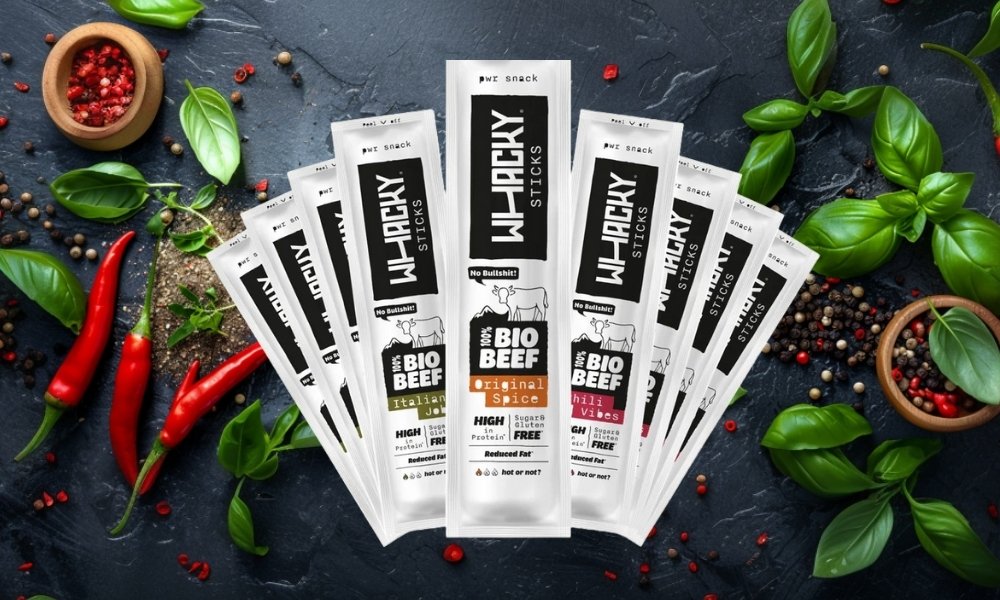
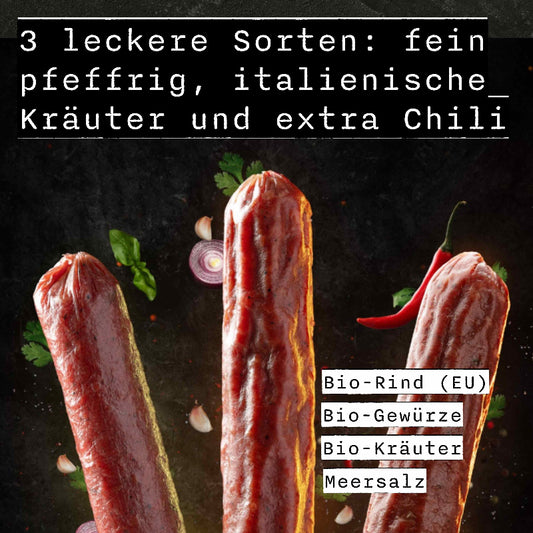
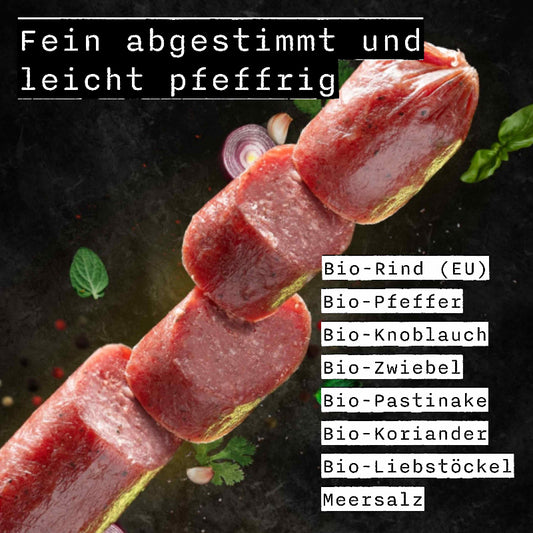
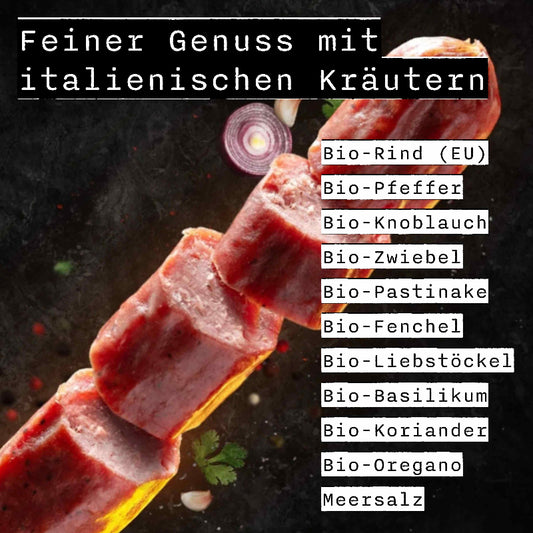
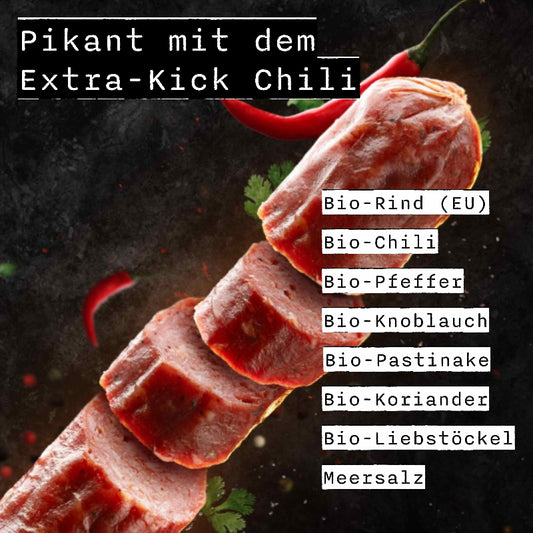
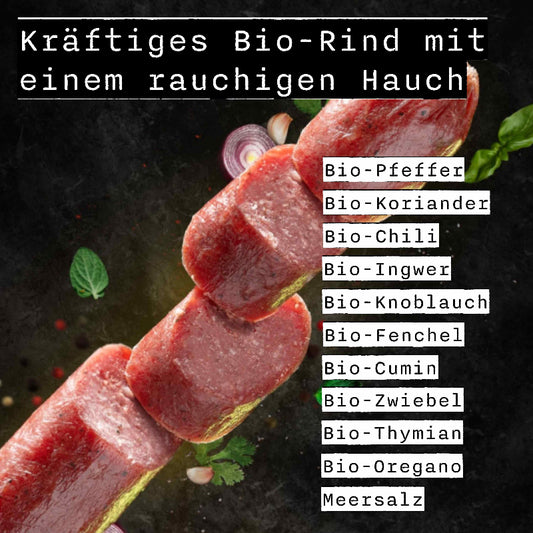
Organic beef sticks : The perfect keto snack
If you're on the go or don't have time between meetings, organic beef sticks are your best friend:
💪 0g sugar, 0g carbohydrates – 100% keto-friendly
🧳 Long shelf life & no refrigeration required – ideal for work, travel or sports
🐄 Natural ingredients – pure beef, no additives
😋 Filling & delicious – real meat instead of protein powder
💡 Practical tip: Always keep 1-2 pieces in your bag or desk drawer – this way you avoid spontaneous mistakes (e.g. bakery or snack vending machine).
Here's how to avoid this mistake
⏰ Plan fixed mealtimes – maintain structure even on keto.
🍱 Meal prep on the weekend – saves time & keeps you consistent.
🥩 Emergency snack plan – organic beef sticks , nuts, cheese, boiled eggs.
💧 Drink enough fluids and replenish electrolytes – otherwise you risk keto fatigue.
💡 Conclusion on mistake 3:
Keto works best with regularity rather than periods of hunger . Plan your meals, ensure a constant energy supply – and keep keto snacks like organic beef sticks on hand so you're not tempted to overeat.
Mistake 4: Too little sleep & too much stress
Many underestimate how much sleep and stress affect the success of the keto diet.
Even if you eat perfectly – too little sleep or persistent stress can sabotage ketosis because your body then switches to “alarm mode”.
🔬 What happens in the body during stress?
When you're stressed, your body releases cortisol – a hormone that provides short-term energy. It ensures that glucose is released into the bloodstream to keep you performing at your best.
However, chronic stress has the opposite effect of what you want to achieve with keto:
🔺 Cortisol inhibits ketone body production
⚖️ Elevated blood sugar levels block fat burning
😴 Lack of sleep increases cravings for carbohydrates
🧠 Insulin resistance can increase , even with low carbohydrate intake.
💡 Fact: Studies show that even one night with less than 6 hours of sleep can reduce insulin sensitivity by up to 20% [Source: Spiegel et al., 2022].
💤 Why sleep is so important for ketosis
Your metabolism regenerates while you sleep:
- Growth hormones are released (supports fat burning)
- Ketone body production increases
- Muscle regeneration → improved nutrient absorption
👉 Those who consistently get too little sleep enter a metabolic stress state that makes ketosis unstable – even with a perfect diet.
🧘♀️ How to balance sleep, stress & ketosis
| Area | problem | Solution |
|---|---|---|
| Sleep quality | Trouble falling asleep, restless sleep | Evening routine with light reduction, blue light filter, magnesium glycinate |
| Stress level | Constant stress in everyday life | 5–10 minutes of breathing exercises (box breathing), meditation, or short walks |
| Dinner | Ate too late / too heavy an meal | Last meal 3 hours before bedtime, moderate portion |
| caffeine | Consumed too late | No more coffee after 2 pm |
| Electrolytes | Magnesium and potassium deficiency | Supplement with mineral water or keto electrolyte mix |
✅ Practical tip for stressed keto beginners
If you find that you can't get into ketosis despite a perfect diet, don't just check your food – but your daily routine .
Even 7-8 hours of sleep per night and small anti-stress rituals (e.g., a walk after eating, journaling, or breathing exercises) make a measurable difference.
💡 Conclusion on mistake 4:
Keto is not just a physical transformation, but also a hormonal one .
Only by allowing your body rest and controlling stress can it remain in ketosis long-term. Diet, sleep, and stress are a triad – if one is missing, the entire system is thrown off balance.
Mistake 5: Too much fruit & hidden fructose
"Fruit is healthy!" – that's true, but unfortunately only to a limited extent with the keto diet.
Many keto beginners overindulge in berries or fruit salads – and don't realize that they quickly exceed their carbohydrate limit.
Fructose is the invisible keto killer : it is converted to glucose in the liver, cannot be used as a ketone body and thus interrupts ketosis.
🍎 Why fructose is problematic on keto
- Fructose increases insulin and liver glycogen levels – ketosis stops.
- The body cannot directly use fructose for energy.
- Even small amounts of "healthy" fruits quickly add up.
- Smoothies and fruit juices are particularly insidious: liquid sugar without any satiating effect.
💡 Example:
A glass of freshly squeezed orange juice (250 ml) contains around 25 g of sugar – more carbohydrates than you should eat in a whole day on a keto diet.
🍇 Keto-friendly vs. problematic fruits
| category | Fruit varieties | Net carbohydrates (approx. per 100 g) | Recommendation |
|---|---|---|---|
| ✅ Well suited | Raspberries, blackberries, strawberries, avocado, lemon | 4–6 g | Small portion (50–100 g) |
| ⚠️ In moderation | Blueberries, currants, cherries | 8–10 g | Enjoy rarely and sparingly |
| ❌ Not suitable | Banana, apple, pear, mango, grapes, pineapple | 12–22 g | Avoid – too high a fructose content |
👉 Tip: Stick with berries if you're in the mood for something sweet – ideally as a topping on quark, yogurt or pancakes.
🧃 Hidden sources of sugar in everyday life
🧃 Fruit juices & smoothies ("100% fruit" means 100% sugar)
🍎 Fruit salads & dried fruits (e.g. dates, raisins)
🍯 Honey & agave syrup – no keto sweeteners!
🍌 Banana chips, granola bars & fruit purees
👉 Rule: If it tastes sweet, it usually contains sugar – even if you can't see it.
✅ How to properly control your fruit consumption
🍓 Max. 1 handful of berries per day (approx. 50–80 g)
🥣 Combine them with fat & protein (e.g. yogurt, quark, nuts) – slows down blood sugar rises
❄️ Frozen berries are perfectly portionable and nutrient-rich.
🚫 No fruit juices, no smoothies – drink water, tea or coffee instead.
💡 Conclusion on mistake 5:
Even "natural sugar" is still sugar. You should eat berries specifically as a side dish rather than as the main ingredient. With 1-2 small portions per day, you'll stay safely in ketosis – without sacrificing taste.
Mistake 6: Drinking too little water – why your body needs more on keto
When you start the keto diet, your body loses a lot of water in the first few days – through the depletion of glycogen stores.
The problem: Many people drink just as little as before , even though the need is increasing significantly.
This quickly leads to headaches, fatigue or concentration problems – the classic “keto flu”.
🚰 Why you need to drink more on keto
- Without carbohydrates, your body stores less water (1 g of glycogen binds approximately 3–4 g of water).
- Frequent urination also leads to a loss of important minerals .
- Metabolism becomes more active, so fluid turnover increases.
👉 The solution is simple: Drink more – but regularly and consciously.
📏 How much water you should drink on keto
| body weight | Recommended daily fluid intake |
|---|---|
| up to 60 kg | approx. 2–2.5 liters |
| 60–80 kg | approx. 2.5–3 liters |
| over 80 kg | approx. 3–3.5 liters |
💡 Rule of thumb: 35–40 ml of water per kg of body weight.
Even more so during sports, in hot weather, or sauna visits.
✅ Everyday tips to drink enough
- Start your day with a glass of water right after getting up.
- Establish a drinking routine: Set a small reminder on your phone every hour or use an app (e.g., WaterMinder, Aqualert).
- Large bottle = clear control: Fill a 1-liter bottle in the morning – drink it twice.
- Flavor without sugar: Add cucumber slices, lemon or mint to the water.
- "Drink before snacking" rule: If you feel hungry between meals, drink a glass of water first.
💡 Mini-hacks for working professionals
- Water bottle on the desk – visible = reminder.
- Every meeting = a glass of water.
- Thermos flask for the car or the commute to work.
- Lunch break: Drink 2 glasses of water before eating → better feeling of satiety.
💡 Conclusion on mistake 6:
Insufficient water intake is one of the silent keto killers. With 3 liters a day , a clear routine, and a few simple tricks, you'll stay hydrated and energized – and incidentally, you'll also support your fat burning.
Mistake 7: Too little or too much protein – why balance is crucial
Protein is the building block of your muscles, hormones and enzymes – and doubly important on the keto diet.
However, many beginners make two opposing mistakes:
They eat too little protein (for fear of falling out of ketosis) or too much , which can also slow down ketosis.
The goal lies – as so often – in the middle .
⚖️ Why protein is so important on keto
✅ Prevents muscle loss during a calorie deficit
✅ Provides long-lasting satiety
✅ Supports metabolism (thermal effect of protein)
✅ Provides building blocks for enzymes and hormones
However, too much protein can lead to your body producing fewer ketone bodies via a process called gluconeogenesis (conversion of protein into sugar).
🧮 How much protein you really need on keto
| Goal | Guideline value per kg of body weight | Example with a body weight of 70 kg |
|---|---|---|
| Maintenance / Health | 1.2–1.5 g | 85–105 g of protein per day |
| Muscle building / Sporting activity | 1.6–2.0 g | 110–140 g of protein per day |
| Severe weight loss | 1.8–2.2 g | 125–155 g of protein per day |
👉 This corresponds to approximately 20–25% of your total calories on keto.
🥩 High-protein foods that are perfect for keto
| Groceries | portion | protein | carbohydrates |
|---|---|---|---|
| Minced beef (20% fat) | 100 g | 19 g | 0 g |
| chicken breast | 100 g | 22 g | 0 g |
| Salmon | 100 g | 20 g | 0 g |
| eggs | 2 pieces | 12 g | <1 g |
| Quark (40%) | 100 g | 12 g | 3 g |
| Organic Beef Stick | 1 piece (25 g) | 10 g | 0 g |
| Cheese (Gouda, Cheddar) | 30 g | 8 g | 0 g |
💡 Tip: Include a protein source in every meal – this stabilizes blood sugar and keeps you feeling full for longer.
🍳 How to determine your perfect protein level
✅ You have constant energy & no muscle loss
✅ You feel full without being bloated
✅ You lose fat, not muscle mass
If you feel heavy and sluggish , or if your ketone levels remain consistently low , eat slightly less protein.
On the other hand, if you become tired, hungry, or your muscles weaken , you need more.
💡 Conclusion on mistake 7:
Protein is your most important ally on the keto diet – but in the right amount.
Based on your body weight, choose high-quality sources such as meat, fish, eggs or organic beef sticks – and you will stay strong, full and in ketosis.
Mistake 8: Too little fat or wrong fat sources
“Fat makes you fat” – this statement is so deeply ingrained in many people that they hesitate to eat enough fat even on the keto diet.
But fat is the foundation of the ketogenic diet. Those who eat too little or the wrong kinds of fat remain hungry, lack energy , or don't even properly enter ketosis.
🔥 Why fat is so crucial in keto
✅ Main energy source – 70–75% of your calories should come from fat
✅ Supports hormone production & nutrient absorption (A, D, E, K)
✅ Provides lasting satiety & stable energy
✅ Promotes ketone body production in the liver
✅ If you reduce fat, you lack the energy source that makes keto effective.
🧈 Good vs. bad fat sources
| category | Good fats ✅ | Bad fats ❌ |
|---|---|---|
| Oils & Fats | Olive oil (extra virgin), avocado oil, coconut oil, MCT oil, butter, ghee | Margarine, sunflower oil, safflower oil, soybean oil |
| Animal sources | Salmon, mackerel, sardines, eggs, beef, pork belly | Deep-frying fat, sausage with sugar or low-quality oil |
| Vegetable fats | Avocado, nuts, seeds (flaxseed, chia) | Cheap nut mixes, salted snacks, chips |
| Snacks | Cheese cubes, organic beef sticks , coconut chips | "Low-fat" products, protein bars, ready-made keto snacks |
👉 Note: Avoid highly processed industrial oils – they promote inflammation and disrupt fat burning.
⚖️ How much fat is enough?
| Have a good meal | Fat content | Example |
|---|---|---|
| Breakfast | 30–40 g | 2 eggs with 1 tbsp butter & avocado |
| Lunch | 40–50 g | Salmon with herb butter & broccoli |
| Dinner | 30–40 g | Chicken with zucchini & olive oil |
| Snacks | 10–20 g | Cheese, organic beef sticks or nuts |
💡 Rule of thumb: If you're full and feel energized, your fat intake is right. If you get cravings – eat more fat, not more protein.
✅ Practical everyday tips
🧈 Plan for visible fat: 1 tablespoon of oil or butter per meal is a must.
🥑 Avocado daily: Healthy fat + potassium source.
☕ Bulletproof Coffee: Ideal in the morning to boost energy.
🍳 Check your cooking habits: Replace vegetable oils with butter, ghee or coconut oil.
🧃 Make your own salad dressings: 3 tbsp olive oil + herbs = healthy source of fat.
💡 Conclusion on mistake 8:
Fat is not your enemy, it's your fuel.
High-quality sources like avocado, butter, salmon and olive oil will keep you feeling full and performing better for longer, and optimally support ketosis.
Mistake 9: Lack of planning & variety – why routine is good, but monotony is dangerous
The beginning is usually easy: eggs, avocado, salmon – it works.
But after two weeks, disillusionment often sets in: the same dishes, no appetite, motivation at rock bottom.
The reason? Lack of planning and too little variety.
Keto works best if you prepare, vary, and plan – otherwise, you'll weaken sooner or later.
⚠️ Why monotony becomes a problem on keto
😴 Boredom = frustration → the risk of reverting to old habits increases.
🍽️ A one-sided diet can lead to micronutrient deficiencies (e.g., magnesium, potassium, B vitamins).
You can find out what role micronutrients play here: Keto Hair Loss – Causes & Tips .
🔄 A lack of structure leads to unconsciously eating too much or too little.
In short: Without planning, there is no balance between enjoyment, energy, and success.
✅ 3 simple strategies for more structure & variety
Plan 1️⃣ week – using a rotation principle
Create a basic meal plan for 7 days with varying protein and fat sources:
| day | Main protein | Vegetables | source of fat |
|---|---|---|---|
| Monday | Salmon | broccoli | butter |
| Tuesday | Beef | zucchini | olive oil |
| Wednesday | chicken | spinach | coconut oil |
| Thursday | eggs | Cauliflower | Ghee |
| Friday | pork belly | Brussels sprouts | avocado |
| Saturday | shrimp | paprika | MCT oil |
| Sunday | Cheese dishes | Mushrooms | butter |
👉 Effect: You automatically get variety without having to rethink things every day.
2️⃣ Introduce a meal prep day
Plan to spend 1-2 hours per week (e.g., Sunday) on meal prep:
🍳 Boil 6 eggs hard
🍗 Pre-cook 2 meat or fish dishes
🥒 Wash and portion the vegetables
🥩 Keep organic beef sticks and cheese cubes within easy reach
💡 This way you always have "Keto to go" – no stress, no fast-food emergency.
3️⃣ Recipe rotation & small experiments
Set yourself the goal of trying one new keto recipe every week .
Whether pancakes, pizza or curry – variety keeps you motivated and trains your cooking routine.
👉 You can find inspiration in my other articles:
Keto diet plan: 7 days to start ketosis
✅ Bonus tip: Planning = Freedom
It sounds paradoxical, but it's true: the clearer your planning, the more flexible you are.
When you know what you can eat, there's no room for doubt or slip-ups – and keto becomes a relaxed habit instead of a challenge.
💡 Conclusion on mistake 9:
Keto success is not a coincidence, but the result of structure and preparation.
With a weekly plan, prepared meals and new recipes, you can add variety to your diet – and stay motivated.
Mistake 10: Eating out & drinks – Keto doesn't fail in the kitchen, but in the restaurant.
You are highly motivated, sticking perfectly to your plan – until the first business lunch, coffee date or family celebration comes around.
Suddenly things get difficult: bread on the table, sauce full of sugar, dessert too tempting.
But keto is not a diet that should restrict you – it works everywhere if you know what to look out for.
🍴 Keto at a restaurant: How to stay on track
| situation | Typical trap | Better choice |
|---|---|---|
| appetizer | Bread, croutons, soups with flour | Antipasti, carpaccio, cheese platter |
| Main course | Pasta, rice, potatoes as a side dish | Vegetables, salad, extra butter or cheese instead of side dishes |
| Sauce / Dressing | Sugar, starch, ready-made sauces | Butter, cream or herb sauces |
| dessert | Ice cream, cake, fruit salad | Espresso, cheese platter, dark chocolate (85%) |
💡 Practical tip: When you order, just say:
"Please no side dish, but more vegetables or cheese – and the sauce separately."
Waiters have known this for a long time – keto is no longer a foreign word.
🧃 Drinks – the underestimated keto pitfall
Even those who do everything right when eating often fail because of the glass.
Many drinks contain sugar or sweeteners that raise insulin levels and slow down ketosis.
| category | Keto-friendly ✅ | Better to avoid ❌ |
|---|---|---|
| Water | still, sparkling, with lemon | flavored water with sugar |
| Coffee & Tea | black, with cream or butter | with milk, syrup or sugar |
| alcohol | dry wine, gin, vodka, brut sparkling wine | Beer, cocktails, liqueurs |
| Soft drinks | Coke Zero, Light (occasionally) | Fruit juices, sodas, iced tea |
| Special drinks | Bulletproof Coffee, electrolyte water | Smoothies, protein shakes with sugar |
💡 Tip: If you want to drink something special – choose mineral water with lime or a gin and tonic (zero) . This way you can enjoyably stay in ketosis.
Snacks for on the go – your keto savior
Whether in the car, on the train or while traveling: Plan small keto emergency solutions.
🥩 Organic Beef Sticks – 0g sugar, 100% protein & fat
🧀 Cheese cubes or mini Babybel
🥜 Almonds or walnuts (unsweetened)
🥚 Boiled eggs
🥥 Coconut chips without added sugar
👉 These snacks fit in any bag – and will save you if you can't find a keto option on the go.
✅ Bonus tip: The 80/20 principle
Don't stress if things don't go perfectly sometimes.
If 80% of your meals are clean keto , your body can handle minor deviations. The important thing is to get back into your routine and not give up.
💡 Conclusion on mistake 10:
Keto doesn't stop at the restaurant door. With small adjustments, a clear focus on drinks, and good snacks, you'll be right on track even when you're out and about – without deprivation, without stress.
If you want to set up keto correctly from the ground up, start with our complete guide to the ketogenic diet .