Imagine you go to the supermarket, your shopping cart is empty – and you're wondering: "What can I actually eat on the keto diet?" This keto food list is designed to help you do just that. Sure, keto sounds simple: low carbs, high fat. But which foods are truly suitable – and where are the hidden pitfalls?
Introduction
Imagine you go to the supermarket, your shopping cart is empty – and suddenly you're wondering: "What foods am I actually allowed to eat on the keto diet?" Almost all keto beginners find themselves at this exact point. The principle sounds simple: low carbs, high fat. But in practice, there are many hidden sugars and carbohydrates lurking that can kick you out of ketosis faster than you'd like.
To prevent this from happening to you, here's the ultimate keto food list . It shows you clearly and concisely:
- which foods are allowed on keto,
- where typical grey areas and traps lie,
- and which products you should avoid completely.
The list is supplemented with nutritional information, portion sizes, and practical shopping tips so you can immediately implement keto in your everyday life – without constantly worrying about whether a food is "keto" or not. This way, you have full control over your diet from day one and can start your ketogenic diet with ease.
Before we look at the complete keto food list, you should understand the basics of the keto diet – especially how ketosis works and which macronutrient distribution is crucial.
If you want to know exactly how to combine these foods, you can find a structured weekly plan here: Keto Diet Plan – 7 Days to Get Started .
Brief summary of the article
In this article you will learn:
- Which foods are allowed on the Keto diet – from meat and fish to vegetables, fats, nuts and dairy products.
- Which foods are taboo – sugar, grains & co.
- Where gray areas lie – for example, with certain types of vegetables or sweeteners.
- How to use the food practically – with portion recommendations, shopping tips and everyday examples.
- Which nutrients are important – so that you can implement keto in a healthy and long-term way.
👉 In the end, you not only have a keto food list, but a real reference book that makes every shopping trip easier.
Keto Basics: Understanding Macros & Ketosis
Before we delve into the specific list of keto foods , it's important to understand the basics of the ketogenic diet. Whether a food is "keto" or not depends not only on its name, but primarily on its macronutrients .
What are macros?
Macronutrients are the three main components of our diet:
- Fats : provide the largest part of the energy in keto (approx. 70–75% of calorie intake).
- Protein : important for muscle maintenance and satiety (approx. 20–25%).
- Carbohydrates : greatly reduced, usually limited to 20–30 g per day (only 5–10%).
Net carbohydrates – the crucial detail
With keto, it's not the total amount of carbohydrates that counts, but the net carbohydrates .
👉 Net carbohydrates = Total carbohydrates – Dietary fiber – Certain sugar alcohols.
This means that foods like broccoli or chia seeds do contain carbohydrates, but many of these come from fiber, which your body doesn't convert into glucose. The net carbohydrate content then remains very low and is suitable for a keto diet.
What is ketosis?
If you drastically reduce your carbohydrate intake, your body will deplete its glycogen stores after a few days. Instead of glucose, it then uses ketone bodies , which are produced in the liver from fat, as its primary energy source.
- Advantage: your body burns more fat.
- Side effect: many report more stable energy levels and less cravings.
Why macros are so important
When checking a food for its suitability for keto, don't just look at the name, but also at its macros – especially the net carbs. Even a "healthy" food like a banana or whole-wheat bread isn't suitable for keto because the carbohydrate content is too high.
In short: Keto only works if your macros are right. That's why the following food list is structured according to precisely these criteria – clear, simple, and immediately applicable.
How to use the list: quantities, portions & limits
The keto food list is not an invitation to "eat without limits." Even though many foods are generally keto-friendly, it always comes down to quantity . Even small deviations can throw you out of ketosis.
Why portion sizes matter
Even with very low-carbohydrate foods, the values add up if you eat too large a portion. For example, 100g of broccoli contains about 4g of net carbohydrates. That sounds like a small amount – but if you eat 500g, you're already at 20g, which is almost your daily limit.
Rules of thumb for everyday life
- Vegetables: 1-2 handfuls per meal are ideal. Choose varieties with low starch (e.g., zucchini, spinach, broccoli).
- Nuts & seeds: very nutrient-rich, but calorie-dense. Stick to a small handful (approx. 30 g).
- Dairy products: Cheese and cream are allowed, but choose full-fat products and consume in moderation.
- Fruit & berries: only in small quantities (e.g. a handful of berries a day).
- Fats & oils: provide most of the energy, but pay attention to quality rather than quantity – cold-pressed oils and animal fats are the best choice.
Overview of daily limits
- Carbohydrates: max. 20-30g net carbohydrates per day
- Protein: approx. 1.2–2.0 g per kg body weight
- Fat: The remainder provides satiety and energy, usually 70–75% of total calories
Practical tip
It's best to track your first few weeks of keto with a food tracker. This way you can quickly see which amounts work for you – and where you might be unconsciously exceeding your limits.
Meat & Eggs
Meat and eggs are cornerstones of the keto diet . They provide high-quality protein, healthy fats, and contain virtually no carbohydrates. This makes them perfect companions for staying full while remaining in ketosis.
Meat
- Suitable for: Beef, pork, lamb, game, poultry (e.g. chicken, turkey, duck).
- Particularly recommended: high-fat cuts such as ground beef, pork belly, or chicken thighs. They provide the right ratio of fat to protein.
- Offal: Liver, heart or kidney are true nutrient bombs – often underestimated, but very keto-friendly.
👉 You should avoid: breaded meat, ready-made products (e.g., sausages with added sugar, marinated products from the supermarket). These often contain hidden carbohydrates.
eggs
Eggs are a true superfood for keto:
- On average, 1 egg contains less than 1g of carbohydrates .
- Contains plenty of protein, healthy fats, vitamins and minerals (including vitamin D, B vitamins, selenium, choline).
- Extremely versatile: can be cooked, fried, used as an omelet, or in baking recipes.
👉 Practical tip: Look for free-range or organic eggs – they contain more omega-3 fatty acids.
Nutritional overview (per 100g, average values)
|
Groceries |
carbohydrates |
protein |
Fat |
|
Minced beef (20% fat) |
0 g |
19 g |
20 g |
|
pork belly |
0 g |
15 g |
28 g |
|
chicken breast |
0 g |
22 g |
2 g |
|
Egg (chicken) |
< 1 g |
13 g |
11 g |
🐟 Fish & Seafood
Fish and seafood are an excellent source of protein and fat for the keto diet. They contain hardly any carbohydrates and also provide valuable omega-3 fatty acids, which have anti-inflammatory properties and support heart and brain health.
🐠 Fatty fish varieties (especially suitable)
- Salmon – rich in Omega-3 and Vitamin D
- Mackerel – high fat content, ideal for ketosis
- Herring & sardines – small powerhouses, often packed with Omega-3
- Tuna (in oil) – high in protein, but pay attention to sustainability
🦐 Seafood & Shellfish
- Shrimp – low in fat, but very high in protein
- Mussels – well-suited, moderate carbohydrate levels
- Crabs & lobsters – high-quality protein sources, versatile in their uses
👉 Tip: While seafood is keto-friendly, it sometimes contains slightly more carbohydrates than fish. Pay attention to portion size.
❌ What you should avoid
- Breaded or fried fish products (e.g. fish fingers)
- Ready-made marinades with sugar or honey
- Surimi & Co. – often stretched with starch or sugar
📊 Nutritional overview (100 g, average values)
|
Groceries |
carbohydrates |
protein |
Fat |
|
Salmon (raw) |
0 g |
20 g |
13 g |
|
mackerel |
0 g |
19 g |
25 g |
|
shrimp |
0–1 g |
24 g |
1 g |
|
mussels |
3–4 g |
12 g |
3 g |
🧀 Dairy products & cheese
Dairy products are allowed in the keto diet – but not all are equally suitable. The key: high fat content, low carbohydrates . Cheese, in particular, is a true keto all-rounder, while milk should only be consumed in moderation.
✅ Highly recommended
🧀 Cheese: Gouda, Emmental, Cheddar, Camembert, Mozzarella – almost all varieties are very low in carbohydrates.
🥛 Cream & sour cream: Full-fat varieties provide plenty of fat and hardly any carbohydrates.
🍶 Greek yogurt (10% fat): creamy, high in protein, suitable in small quantities.
🍯 Quark (40%): high in protein, versatile – perfect for sweet keto recipes with berries & sweetener.
⚠️ Consume in moderation
🥛 Milk: contains lactose → approx. 5 g carbohydrates per 100 ml. It's better to use plant-based alternatives without sugar (e.g., unsweetened almond or coconut milk).
🥤 Yogurt & Kefir: natural, small amounts are okay, but check the carbohydrates.
❌ You should avoid
- Light products (e.g., low-fat yogurt) → often contain more sugar than fat.
- Flavored yogurts, puddings & desserts → almost always full of sugar.
- Condensed milk & coffee creamer → Sugar traps.
📊 Nutritional overview (100 g, average values)
|
Groceries |
carbohydrates |
protein |
Fat |
|
Gouda (45% fat in dry matter) |
0 g |
25 g |
30 g |
|
Camembert |
0.5 g |
20 g |
24 g |
|
Cream (30%) |
3 g |
2 g |
30 g |
|
Quark (40%) |
3–4 g |
12 g |
10 g |
|
Milk (3.5%) |
5 g |
3 g |
3.5 g |
👉 Practical tip: Always choose full-fat versions , as they contain fewer carbohydrates and keep you feeling full for longer.
🥦 Vegetables (low in carbohydrates)
Vegetables are a must on the keto diet – but only low-carb varieties. They provide fiber, vitamins, and minerals that are important for your health and maintaining ketosis.
✅ Particularly suitable
🥬 Leafy greens: spinach, chard, arugula, kale
🥦 Cruciferous vegetables: Broccoli, cauliflower, Brussels sprouts, white cabbage
🥒 Other favorites: zucchini, cucumber, celery, asparagus, mushrooms, green bell peppers
👉 These varieties usually contain only 2–4 g of net carbohydrates per 100 g and can be generously incorporated into the diet.
⚠️ Enjoy with caution
🍅 Tomatoes → approx. 3–4 g carbohydrates per 100 g, okay in moderation
🧅 Onions & leeks → relatively high in carbohydrates, use sparingly
🌽 Corn, carrots, beetroot → high in starch, only suitable in very small quantities
❌ You should avoid
🥔 Potatoes, sweet potatoes
🍚 Rice, couscous
🌽 Corn products (polenta, popcorn etc.)
These foods are too starchy and will kick you out of ketosis.
📊 Nutritional overview (100 g, average values)
|
Groceries |
carbohydrates |
protein |
Fat |
|
zucchini |
2 g |
1 g |
0 g |
|
broccoli |
4 g |
3 g |
0 g |
|
Cauliflower |
3 g |
2 g |
0 g |
|
spinach |
1 g |
2 g |
0 g |
|
tomato |
3 g |
1 g |
0 g |
👉 Practical tip: Roughly follow the rule of thumb: "Vegetables that grow above ground are usually suitable for keto – anything that grows underground is less likely to be."
🍓 Fruit & berries (in moderation)
Fruit is generally considered healthy – however, caution is advised on a keto diet. Many varieties contain a lot of fructose, which can quickly disrupt ketosis. The good news: some berries are keto-friendly , as long as you keep an eye on the quantity.
✅ Suitable (in small quantities)
🍓 Strawberries – approx. 6 g net carbohydrate per 100 g
🫐 Blueberries – approx. 9 g carbohydrates, so use sparingly
🍇 Blackberries – approx. 5g carbohydrates, ideal for desserts
🍒 Raspberries – approx. 5g carbs, perfect snack option
👉 Best served as a small portion (a handful / 50–100 g) in yogurt, quark or as a topping.
⚠️ Caution with:
🍎 Apples (11 g carbohydrates/100 g)
🍌 Bananas (22 g carbs/100 g)
🍐 Pears (12 g carbohydrates/100 g)
🍊 Oranges (12 g carbohydrates/100 g)
These fruits contain too much sugar for keto and should be avoided.
❌ Not suitable at all
- Dried fruits (dates, raisins, figs, dried mango, etc.) → extremely high sugar content.
- Smoothies & fruit juices → even without added sugar, usually contain 10–15 g of carbohydrates per glass.
📊 Nutritional overview (100 g, average values)
|
Groceries |
carbohydrates |
protein |
Fat |
|
Strawberries |
6 g |
1 g |
0 g |
|
Raspberries |
5 g |
1 g |
0 g |
|
blackberries |
5 g |
1 g |
0 g |
|
blueberries |
9 g |
1 g |
0 g |
|
banana |
22 g |
1 g |
0 g |
👉 Practical tip: When it comes to fruit, always think in small portions . Half a handful of berries as a topping can enhance a meal – but more than that is best.
🌰 Nuts, seeds & kernels
Nuts and seeds are little powerhouses: They provide healthy fats, fiber, and micronutrients like magnesium, zinc, and vitamin E. This makes them a perfect fit for the keto diet – as long as you keep an eye on the quantities , because they are very calorie-dense.
✅ Particularly suitable
🥜 Almonds – approx. 6 g net carbs per 100 g, rich in magnesium
🌰 Walnuts – approx. 7 g carbohydrates, good source of Omega-3
🥥 Coconuts (flakes, oil, flour) – very high in fat and fiber
🌻 Sunflower seeds – approx. 9 g carbohydrates, ideal as a snack or topping
🍃 Flaxseeds & chia seeds – almost zero usable carbs, but lots of fiber
⚠️ Enjoy with caution
🥜 Cashews – approx. 27g carbs per 100g → quickly too much
🌰 Pistachios – approx. 18 g carbohydrates per 100 g, best consumed only in very small quantities
🥜 Peanuts – botanically legumes, approx. 7 g carbohydrates; okay in moderation, but watch out for aflatoxins.
❌ Best avoided
- Salted nut mixtures with sugar or honey glaze
- Nut bars & "fitness bars" → almost always contain sugar or syrup
- Ready-made nut butters with added sugar
📊 Nutritional overview (100 g, average values)
|
Groceries |
carbohydrates |
protein |
Fat |
|
almonds |
6 g |
21 g |
49 g |
|
Walnuts |
7 g |
15 g |
65 g |
|
Chia seeds |
2 g |
17 g |
31 g |
|
Cashews |
27 g |
18 g |
44 g |
|
coconut flakes |
6 g |
6 g |
60 g |
👉 Practical tip: Stick to a portion of 30 g (a small handful) – that's enough to benefit from the nutrients without immediately exceeding your calorie or carbohydrate allowance.
🥑 Fats & Oils
Fats are the foundation of the keto diet: they provide around 70–75% of daily calories and ensure that you stay full and in ketosis. However, it's not just the quantity that's crucial, but above all the quality of the fats .
✅ Highly recommended
🥑 Avocado & avocado oil – rich in monounsaturated fatty acids and potassium
🫒 Extra virgin olive oil – perfect for cold dishes & dressings
🧈 Butter & Ghee – good sources of saturated fats, ideal for frying
🥥 Coconut oil & MCT oil – provide readily available energy, promote ketosis
🐟 Fish oil – source of Omega-3, anti-inflammatory
⚠️ Enjoy in moderation
🌻 Sunflower oil & rapeseed oil – contain many omega-6 fatty acids → okay in small amounts, but too much can promote inflammation
🥜 Nut oils (e.g., walnut oil, hazelnut oil) – interesting in terms of taste, but expensive and delicate
❌ You should avoid
🏭 Industrial oils such as margarine, soybean oil, safflower oil, corn oil – highly processed, rich in Omega-6 and trans fats
🍟 Deep frying fats & hydrogenated oils – real keto killers, problematic for your health
📊 Nutritional overview (100 g, average values)
|
Groceries |
carbohydrates |
protein |
Fat |
|
olive oil |
0 g |
0 g |
100 g |
|
butter |
0 g |
1 g |
82 g |
|
coconut oil |
0 g |
0 g |
100 g |
|
avocado |
2 g |
2 g |
15 g |
|
MCT oil |
0 g |
0 g |
100 g |
👉 Practical tip: Use a mix of saturated (butter, coconut oil) and unsaturated fats (olive oil, avocado oil) . This way you cover all the benefits and keep your fatty acid profile balanced.
🥤 Beverages & Additives
Drinking is just as important as eating on the keto diet – because adequate fluid intake supports ketosis, regulates electrolytes, and prevents typical side effects like headaches or fatigue. But not every drink is suitable.
✅ Keto-friendly drinks
💧 Water – still or sparkling, always the best choice
🍵 Unsweetened tea – green, black, herbal or fruit tea (without additives)
☕ Coffee – black, with cream or butter/MCT oil (Bulletproof Coffee)
🥛 Unsweetened plant milk – almond milk, coconut milk, cashew milk (no added sugar)
🥤 Flavored mineral water – provided it is free of sugar and sweeteners
⚠️ In moderation
🍷 Alcohol: Dry wine or clear spirits are keto-compatible, but inhibit fat burning → enjoy them rarely.
🥤 Light drinks: Cola Zero & Co. may not contain carbohydrates, but they do contain sweeteners that can affect appetite or insulin levels in some people.
❌ Absolutely avoid
🥤 Soft drinks & lemonades – extremely high sugar content
🍹 Fruit juices & smoothies – even without added sugar, they contain 10–15 g of carbohydrates per glass.
🍼 Milkshakes, hot chocolate & ready-made drinks – almost always sugar traps
📊 Nutritional information overview (100 ml, average values)
|
beverage |
carbohydrates |
protein |
Fat |
|
Water |
0 g |
0 g |
0 g |
|
Black coffee |
0 g |
0 g |
0 g |
|
Unsweetened tea |
0 g |
0 g |
0 g |
|
Milk (3.5%) |
5 g |
3 g |
3.5 g |
|
cola |
10 g |
0 g |
0 g |
👉 Practical tip: In addition to fluids, pay attention to your electrolytes (sodium, potassium, magnesium) . Especially in the first few weeks, the body loses a lot of water and minerals due to the reduced carbohydrate intake. A glass of water with a pinch of salt or an electrolyte powder can work wonders here.
🍖 Keto Snacks – Ideas for on the go and in between meals
Snacking is allowed on the keto diet too – as long as the snacks are low in carbohydrates and high in fat and/or protein . Perfect for on the go, at the office, or when you get a little hungry between meals.
Simple ideas can be especially helpful when you're on the go – here you'll find suitable inspiration: Keto Snacks – Ideas for on the go .
✅ Savory Keto Snacks
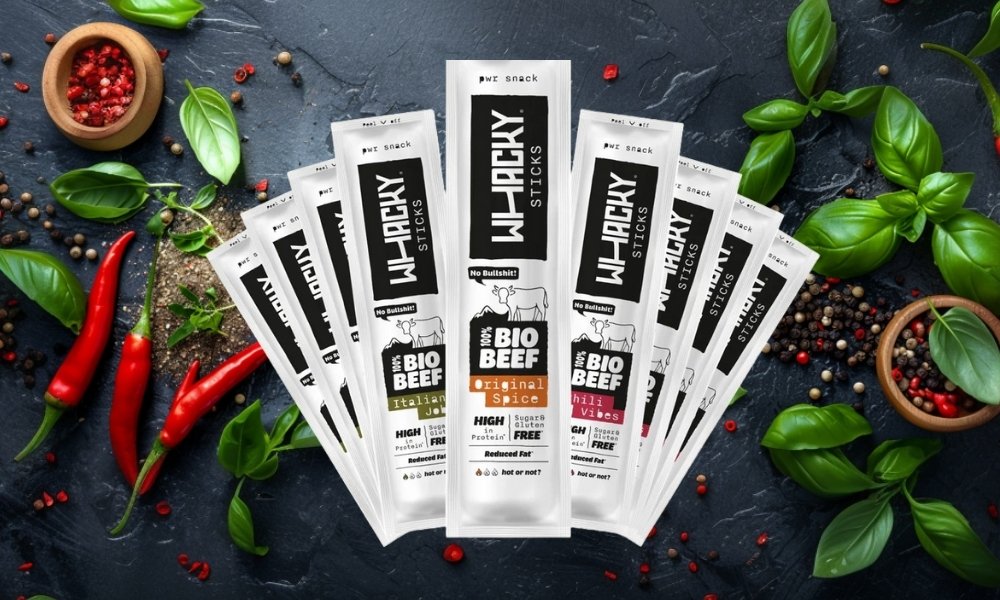
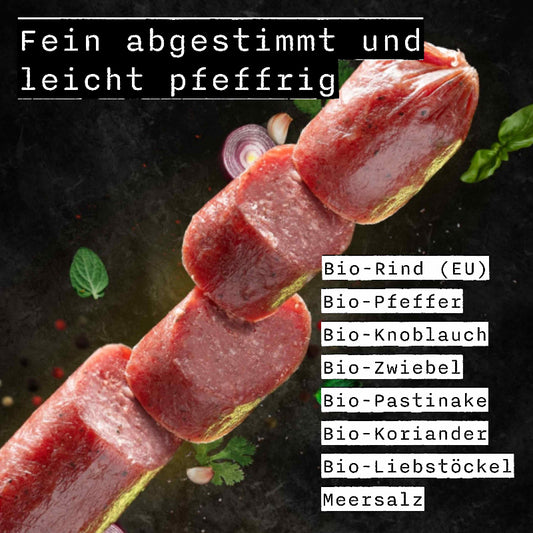
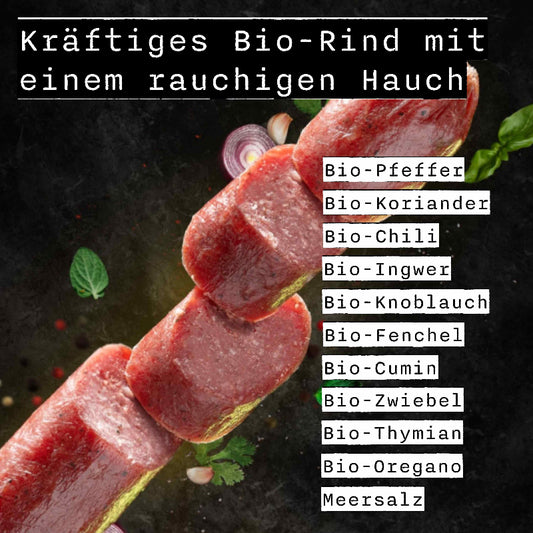
🍖 Organic Beef Sticks – ideal for on the go: high in protein, filling, zero sugar, perfect for taking with you
🥚 Boiled eggs – a classic, quick to prepare, and always with you.
🧀 Cheese cubes or mini cheese snacks – e.g., Gouda or Cheddar – provide fat and protein.
🥓 Crispy bacon – as a snack or crumble over salads
🥑 Guacamole with vegetable sticks (celery, cucumber, zucchini) – creamy, nutrient-rich
🍬 Sweet Keto Snacks
🍫 Sugar-free chocolate (85% or more cocoa content) – in small quantities
🍓 A handful of berries with cream or quark – fruity and keto-friendly
🥜 Nut butter (e.g. almond or peanut butter, without added sugar) – perfect on celery sticks
🥤 Keto-friendly "to-go" options
🥛 Bulletproof Coffee (coffee with butter or MCT oil) – fills you up and gives you energy
🥤 Protein shakes with unsweetened almond or coconut milk – perfect after a workout
📦 Why organic beef sticks are so practical
🚫 No carbohydrates, no added sugar
💪 High in protein → keeps you full for a long time
🌱 Natural ingredients → without unnecessary additives
🎒 Perfect for on the go → fits in any bag, always within easy reach
👉 They are the perfect keto snack for long workdays, travel or hikes when there is no refrigerator nearby.
⚖️ Critical Foods & Gray Areas
Not everything is clearly "allowed" or "forbidden" on the keto diet. Some foods exist in a gray area : they're okay in small quantities, but can quickly exceed the carbohydrate limit. This is precisely where most keto beginners make mistakes.
Vegetables with a higher starch content
- Tomatoes → approx. 3–4 g carbohydrates per 100 g, perfectly fine in small quantities
- Onions & leeks → aromatic, but higher in carbohydrates → better as a seasoning than as a main ingredient
- Carrots & beetroot → in moderation, as they contain a relatively high amount of sugar/starch
👉 Practical tip: Use these foods like spices or side dishes , not as the main component of your meals.
🍞 Low-carb products from the supermarket
You'll increasingly find "low-carb bread," "protein bars," or "keto muesli." Sounds good, but is often a marketing ploy.
✅ Some products are truly low in carbohydrates
❌ However, many contain hidden sugars, starch, or sugar substitutes with questionable effects on insulin and ketosis.
👉 Remember: Always check the ingredient list – if you see more than 3 unknown additives, it's best to avoid it.
🍺 Alcohol in the gray area
- Allowed (in small quantities): dry wine, brut sparkling wine, clear spirits (e.g. vodka, gin)
- Not recommended: Beer, liqueurs, cocktails – they contain a lot of sugar or malt
- Fundamental problem: Even “keto-friendly” alcohol inhibits fat burning → counterproductive for weight loss success.
🍬 Sweeteners & Substitutes
✅ Stevia, erythritol, xylitol → are hardly or not at all absorbed into the bloodstream
❌ Maltitol, sorbitol, sucralose → can cause digestive problems or affect insulin levels
👉 Every body reacts differently – test how you feel with certain sweeteners.
Conclusion
The keto food list is your guide through the nutrition jungle. With meat, fish, eggs, healthy fats, low-carb vegetables, and select snacks, you're perfectly equipped to stay in ketosis. Most importantly: quality over quantity, keep an eye on portion sizes, and consciously use gray-zone foods. This way, keto becomes not just a short-term diet, but a sustainable way of eating that can be easily integrated into your everyday life.
If you're just starting out, first read our complete guide to the keto diet for beginners – there we explain step by step how to get into ketosis.
Be careful to avoid hidden carbohydrates – here you can find out which mistakes many people make: The 10 most common mistakes in the keto diet .
Want to learn more about the keto diet?
👉 Click here for the article on the Keto diet plan .